
The Devil is in the Details: Building a Club, Brand and Culture from the Ground Up
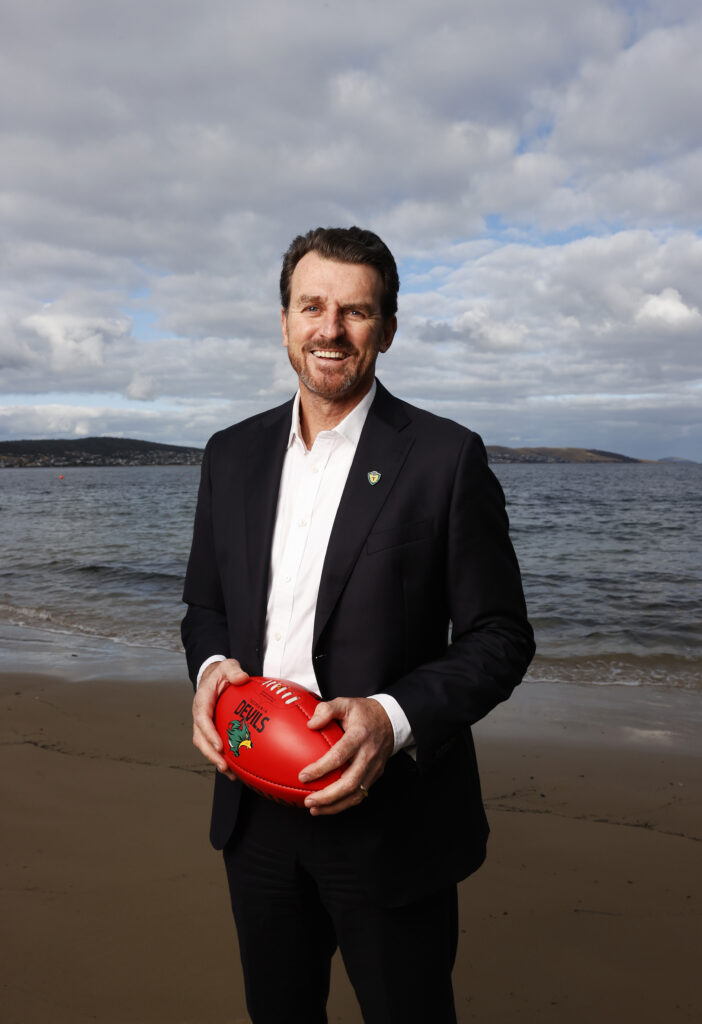
Which early decisions are most likely to shape the Devils for years to come, and how do you determine what needs to be set now and what should be allowed to evolve?
One critical piece of work we undertook right at the start has become the foundation of every decision to this point and will be for the life of the club. The Board, leadership team, staff and broader community crafted our purpose and identity as the Tasmania Football Club, called the Devils’ Why and Way. The charter underpins everything that the club is built on. Every decision we make, no matter how big or small, is tested against this direction. Does it protect and strengthen the Tassie Devils Why and Way?
The same logic applies to talent. Structures and systems can be refined over time, but the people we bring in early, particularly in football and senior leadership, set the standard for everyone who follows. That standard now shapes every recruitment decision we make, on and off the field, so we’ve prioritised it ahead of almost everything else.
Our statewide footprint matters just as much. We’re committed to a genuine presence in every region, including a significant footprint in the north, because this club only works if every Tasmanian feels ownership of it. That shapes our reach for the life of the club, so it had to be right immediately.
Infrastructure is the same. The High Performance Centre is more than a building. It is a foundation piece for our football program and the way we develop people and players for decades to come. If we were to get it wrong, there’s no revisiting that decision in five years. Everything else, we’re happy to adjust and improve as we go. But purpose, talent, statewide reach and infrastructure are the decisions we’ve had to get right from the start, because everything else is built on them.
you don't fix football problems with football decisions – you fix them with people and environment, and the football follows
You have emphasised the need to establish the right culture before making key football decisions. How is that principle shaping the people you appoint, the structures you put in place and the standards that guide the club day to day?
I’ve said before that you don’t fix football problems with football decisions – you fix them with people and environment, and the football follows. The culture of an organisation is the foundation everything else is built on, and you can’t retrofit it once the business is already moving. That’s shaped how we’ve appointed people from the outset. We’re not just assessing capability or experience. We’re asking whether someone strengthens the environment we’re trying to create.
That applies equally across the organisation. The people we bring into football, commercial, community and operational roles all contribute to the standards and behaviours that define this club. In the early stages of a new organisation, every person helps shape what becomes normal.
It’s also influenced how we’ve set up decision-making structures. Because we’re building this club from the ground up, we’ve had the opportunity to be deliberate about roles, responsibilities, and accountabilities. Our football people need the confidence and trust to make football decisions. Our Board’s role is backing the long-term plan and holding us accountable to it. Everyone understands where that line sits, and it’s what lets us stay patient with results while still holding a hard line on standards.
Day to day, culture comes down to standards that are easy to state and harder to hold. We talk about being frank and fast: direct with each other and quick to raise something rather than letting it sit. It’s the standard we go back to in tough conversations, whether they relate to performance, behaviour or the way we operate. Culture isn’t just a set of words on a wall. It’s what happens when pressure arrives. That’s what ultimately determines whether an organisation can perform when it matters most.
Your time at Richmond showed what sustained transformation can achieve. Which lessons have you carried into Tasmania, and how have you adapted them to the realities of a new club, market and moment?
The clearest lesson from Richmond is patience around process. Real change doesn’t happen on a predetermined schedule – it happens in the time the work actually takes. You have to give people and programs the time to develop and resist the temptation to force outcomes before the foundations are properly in place. That discipline doesn’t change wherever you are.
The other lesson is that a cultural review isn’t something you do once and file away. It’s a tool you keep using. At Richmond, we didn’t fix the culture and move on. We kept coming back to it, checking whether what we’d built was still working as the club changed around it. I’ve carried that into the Devils from day one, rather than treating culture as a box to tick early and leave behind. We check in on it constantly, because a young organisation changes fast, and what worked six months ago might not be right today.
We played the long game at Richmond, and it paid off: three premierships and a transformation of the club that went well beyond what happened on the field. But that success didn’t come from any one decision. It came from cultural buy-in across the entire organisation, sustained over years, not months.
The Devils must represent an entire state while also succeeding as a smaller-market club. What will a sustainable model require, and where do the hardest trade-offs lie between commercial growth, statewide access and competitive ambition?
Representing the entire state is fundamental to who we are. We are the Tasmania Football Club, and that identity has to guide every decision we make. Success will come from balancing commercial growth with connection across every region of Tasmania, so that no matter where people live, they feel this is their club.
A sustainable model requires genuine long-term partners who back the whole state, not just a logo. The work we’ve done with our commercial partners already reflects this. It requires government and community investment in infrastructure, because a club our size can’t carry the full cost of statewide access alone. It requires us to be honest with our own membership and fan base about the model we’re building, rather than overpromising.
The hardest trade-off is time. Every competitive club wants everything at once: list talent, financial strength, statewide reach. But building all three together, properly, takes discipline and the right sequencing. Our approach is to build the foundations that make success sustainable, rather than chasing short-term wins that put the long-term health of this club at risk. That’s not a compromise – it’s how you build something that lasts.
Our approach is to build the foundations that make success sustainable, rather than chasing short-term wins that put the long-term health of this club at risk